What is Pier & Beam Crawlspace Rodent Control?
Pier and beam crawlspace rodent control is the specialized structural fortification and trenching of elevated home foundations to stop burrowing rats and wildlife. In Friendswood and Alvin, technicians excavate a shallow perimeter trench, install 1/4-inch galvanized hardware cloth skirts below grade, seal subfloor plumbing cutouts, and decontaminate soil surfaces. This stops Norway rats, mice, and possums from nesting beneath floorboards and chewing plumbing.
While modern suburban developments in West Ranch feature slab-on-grade foundations, historic homes along Mustang Bayou, FM 528, and Old Friendswood are built on raised concrete or cedar piers. These elevated crawlspaces provide a dark, humid, sheltered environment that attracts ground-dwelling rodents, particularly heavy Norway rats (Rattus norvegicus).
Once rodents penetrate the foundation skirting, they tunnel into the dirt, shred fiberglass subfloor insulation, and use plumbing penetrations under bathtubs and kitchen sinks as direct highways into your living space.
Diagnostic Signs of Crawlspace Infestations
Homeowners with pier-and-beam foundations should watch for these classic symptoms:
- Nocturnal Floorboard Scratching: Scratching and scurrying sounds coming from directly beneath the bedroom or living room floorboards.
- Unexplained Cold Spots in Winter: Drafty floorboards caused by rodents pulling down fiberglass batt insulation beneath the subfloor.
- Musty Ammonia Odors Rising Through Vents: Odors rising through floor registers and baseboards as urine saturates crawlspace soil.
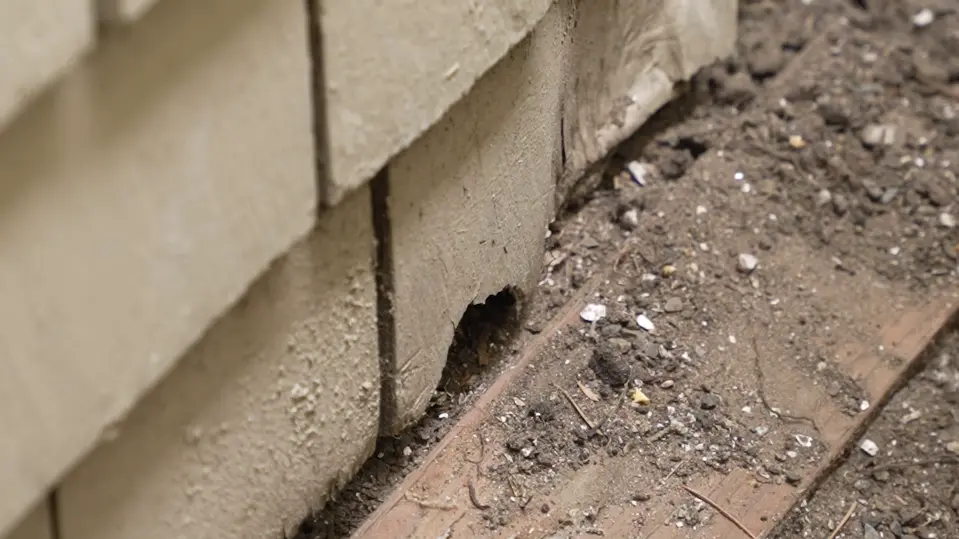
- Perimeter Dirt Mounds and Burrow Holes: Smooth, 2-to-3-inch holes dug into the soil directly adjacent to foundation piers or perimeter skirts.
- Damaged PEX Water Lines: Chewed plastic plumbing under sinks or washing machine hookups leading to sudden drops in household water pressure.
- Subfloor Insulation Collapse: Rolls of fiberglass batt insulation hanging down into the crawlspace mud, soaked with animal urine.
Technical Specifications: Below-Grade Trenching & Wire Skirting
Standard wood lattice, decorative vinyl skirts, and chicken wire offer zero protection against Norway rats. Norway rats are powerful diggers capable of excavating burrows two to three feet deep through Texas gumbo clay.
Our structural crawlspace barrier protocol:
- Perimeter Trenching: We excavate a continuous 10-to-12-inch trench around the entire exterior foundation skirting or pier line.
- Galvanized Wire Mesh Installation: We secure 1/4-inch 23-gauge galvanized hardware cloth to the structural sills and skirt framing, extending the wire vertically down into the trench.
- L-Shaped Rat Barrier (Apron Bend): At the bottom of the trench, the wire mesh is bent outward at a 90-degree angle to create a horizontal subterranean apron extending six inches away from the house. When a rat attempts to burrow downward along the skirt, it strikes the metal wire apron and cannot dig through.
- Compacted Backfill: The trench is backfilled with heavy clay and gravel, anchoring the subterranean steel barrier permanently in place.
- Subfloor Plumbing Penetration Collars: Technicians enter the crawlspace in protective gear, sealing every floor penetration where drainpipes, water feeds, and electrical lines breach the subfloor using steel mesh and fire-rated sealants.
The Flood Migration Trigger: How Gulf Storms Drive Ground Rats Indoors
In Galveston County, rainfall intensity and localized bayou flooding play a decisive role in crawlspace rodent pressure. The low elevation of Friendswood and Alvin makes ground burrows along Cowart Creek and Mustang Bayou highly vulnerable to water table surges.
During tropical storms, high tides, or seasonal torrential downpours, water saturates subterranean rodent burrows within hours. To avoid drowning, entire Norway rat family units are forced to evacuate to higher ground.
An elevated pier-and-beam crawlspace offers the nearest dry haven. Rodents scramble up concrete foundation piers, climb plumbing drainpipes, and nest directly in the underside of fiberglass floor insulation batts. Without a subterranean steel barrier, every major rain event drives dozens of displaced rodents under your living room floorboards.
Crawlspace Remediation vs. Foundation Trapping
| Service Element | Friendswood Rodent Shield Trenching & Exclusion | Generic Bug Sprayer Crawlspace Treatment |
|---|---|---|
| Below-Grade Wire Skirt | 1/4-inch galvanized steel trenched 12 inches with L-apron | None; only inspects above-ground lattice |
| Subfloor Plumbing Sealing | Every pipe cutout sealed with steel mesh & elastomeric seal | Unsealed; rodents climb into living space |
| Carcass Extraction | Tyvek-suited crawlspace extraction of dead animals | Traps rarely placed in muddy crawlspaces |
| Soil Sanitation | Biocidal spray applied directly to contaminated soil | Fragrance deodorizer |
| Warranty | 1-Year Renewable Structural Exclusion Guarantee | None |
| Structural Protection | Preserves subfloor framing, wiring, and PEX plumbing | High risk of recurring plumbing leaks |
Frequently Asked Questions About Crawlspace Control
Can rats burrow underneath concrete footers and skirting?
Yes. Norway rats can burrow up to three feet vertically and five feet horizontally through loose Texas soil. This is why above-ground screening always fails. Our installation bends the wire mesh outward in an L-apron underground, physically blocking the downward and forward trajectory of burrowing rodents.
What type of insulation should be used under a pier and beam house after rodent damage?
Once contaminated fiberglass batts are extracted and the subfloor is sanitized, we recommend either rigid foam board insulation with sealed joints or fresh paper-faced fiberglass secured with heavy galvanized wire insulation supports. All penetrations must be steel-collared before insulation is installed.
How do you treat dead animal smells coming from beneath the floor?
If an animal has died under your crawlspace, masking sprays will not work. Our technicians suit up, enter the crawlspace, locate and extract the carcass, remove all maggots and contaminated soil, and saturate the area with industrial biocidal enzyme sprays to neutralize the putrefaction odors.
Subfloor Anatomy: Why Pier and Beam Homes Face Severe Rodent Pressures
Elevated pier and beam construction is an architectural hallmark of historic Texas Gulf Coast homes, particularly along the historic districts of Friendswood and Alvin. Raising a home 18 to 36 inches above the natural grade protects wooden subfloors from coastal dampness and surface water pooling.
However, this elevated crawlspace creates an expansive, sheltered under-house environment that functions as a natural incubator for Norway rats (Rattus norvegicus), field mice, possums, and raccoons:
- Open Subfloor Cavities: Beneath your finished tongue-and-groove hardwood or plywood subfloor sits an intricate grid of wooden floor joists and beams. Most homes built prior to 2000 feature open fiberglass batt insulation suspended beneath the joists using thin wire ties.
- Insulation Pull-Down & Nesting: Norway rats pull down fiberglass insulation batts, creating hollowed-out nesting chambers between floor joists directly beneath heated bedrooms.
- Unsealed Plumbing Penetrations: Plumbers cut rough, oversized holes through the subfloor to route 3-inch PVC toilet waste stacks, 2-inch sink drains, and water supply lines. Because these rough openings remain hidden beneath bathtubs and vanities, burrowing rodents climb up plumbing drainpipes and step directly into your bathroom cabinets.
Subterranean Trenching & L-Apron Installation Specifications
Standard lattice wood skirting, thin vinyl panels, and chicken wire cannot stop Norway rats. A mature Norway rat can chew through cedar lattice in minutes or dig a burrow two feet below grade to bypass shallow skirting.
Our structural crawlspace exclusion utilizes an engineered subterranean steel barrier:
| Installation Stage | Trade Material Standard | Structural Purpose | Durability Metric |
|---|---|---|---|
| Grade Excavation | 10 to 12-inch vertical trench around full perimeter | Penetrates below natural rodent burrow depth | 100% perimeter containment |
| Galvanized Wire Fabric | 1/4-inch 23-gauge hot-dipped zinc steel hardware cloth | Small enough to stop mice, thick enough to stop rat teeth | Rust-proof for 20+ years |
| Subterranean L-Apron | 6-inch outward horizontal bend at trench base | Physically blocks downward and forward burrowing trajectory | Stops tunneling rats instantly |
| Mechanical Fastening | Heavy steel staples and self-tapping screws every 3 inches | Anchors wire firmly to treated wooden sills and masonry | Cannot be pushed away by raccoons |
| Backfill & Compaction | Compacted native gumbo clay and drainage pea gravel | Seals trench, prevents soil erosion, anchors apron | Solid structural lock |
Step-by-Step Crawlspace Remediation Protocol
- Hazardous Debris & Carcass Extraction: Technicians suit up in full Tyvek suits and P100 respirators, enter the crawlspace, and manually remove all dead animal carcasses, contaminated nesting debris, and fallen insulation.
- Subfloor Plumbing Fortification: Every plumbing cutout beneath kitchens, bathrooms, and laundry rooms is fitted with custom-cut galvanized steel collars and fire-rated elastomeric sealants.
- Perimeter Trenching & Steel Skirting: The continuous 12-inch perimeter trench is excavated, wire mesh is secured to framing sills, the L-apron is formed, and the trench is backfilled with compacted clay.
- Soil Biocidal Sanitization: High-pressure sprayers apply commercial enzymatic biocides directly across crawlspace soil surfaces, breaking down animal urine proteins, killing bacteria, and neutralizing persistent odors.
- Access Hatch Hardening: The crawlspace entry door is reinforced with steel mesh backing, heavy-duty hinges, and a padlock latch to prevent unauthorized wildlife entry.
Frequently Asked Questions About Crawlspace Exclusion
How long does a full crawlspace trenching project take?
For an average 1,800 square foot pier-and-beam home, trenching and wire installation typically requires two to three full working days. Day one focuses on perimeter excavation and subterranean wire installation. Day two addresses internal subfloor plumbing cutouts, carcass removal, and biocidal soil sanitization.
Will subterranean wire mesh affect my home’s crawlspace ventilation?
No. Because we utilize 1/4-inch galvanized hardware cloth rather than solid plywood or plastic, air circulates freely beneath your floorboards. This maintains vital cross-ventilation, preventing subfloor wood rot, mold growth, and high humidity buildup during Texas summers.
Can Norway rats chew through the galvanized steel hardware cloth?
No. The 23-gauge galvanized wire features a tensile strength that exceeds the maximum chewing capability of rodent teeth. The 1/4-inch square apertures prevent rodents from getting their jaws around individual wire strands, rendering chewing physically impossible.
Soil Hydrology & Vapor Barrier Integrity in Bay Area Crawlspaces
Elevated homes in Friendswood, Alvin, and League City must balance moisture control with structural rodent defense:
- The Risk of Damaged Vapor Barriers: When Norway rats burrow through crawlspace dirt, they shred 6-mil poly vapor barriers, exposing raw, damp soil to subfloor framing. Evaporating moisture leads to wood rot, mold blooms, and swollen subflooring.
- Trenching Protocol Specs: We install 23-gauge hot-dipped galvanized hardware cloth secured with masonry expansion anchors at 8-inch intervals along concrete piers, backfilling with crushed gravel to discourage future digging.
- Subfloor Plumbing Box Armor: All tub boxes, toilet drain clearances, and PEX water manifold penetrations are reinforced with heavy expanded metal lath bedded in chew-proof polyurethane elastomeric sealants.